
Image courtesy of Calreyn88, Wikimedia Commons
Aston Martin DBS Price Guide

-
typical price 17 October, 2026
Aston Martin DBS Statistics
Colour Spread
Based on yourbestprice data on 10 October 2026
Listings by Year of Registration
Based on yourbestprice data on 10 October 2026
Engine Capacity
Based on yourbestprice data on 10 October 2026
Mileage Range
Based on yourbestprice data on 10 October 2026
The data above is based on information retrieved from actual, real-world Aston Martin DBS sales listings. Our AI agents try to correct obvious mistakes sellers make, such as incorrect engine capacities, but some may still fall through.
Aston Martin DBS Generation / Variant Price Guides
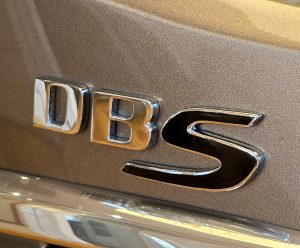
The DBS name has appeared three times in Aston Martin’s history; each time on the most powerful and uncompromising grand tourer the company could build. The 1967 original that housed the new V8, the 2007 flagship that starred alongside Daniel Craig, and the 2018 Superleggera that took the twin-turbo V12 to its natural conclusion. Three very different cars, one consistent ambition.
The Original DBS (1967–1972)
William Towns’s design was intended from the start to accommodate the Tadek Marek V8 that wasn’t quite ready. So the original DBS launched with the DB6’s 4.0-litre straight-six before the 5.3-litre quad-cam V8 arrived in September 1969. Around 787 six-cylinder cars were built alongside 405 V8-equipped DBSV8s. The wider, heavier body was polarising at the time. Many felt it lacked the elegance of the DB6 but it has aged into a distinctive presence.
The DBS V12 (2007–2012)
The second DBS was Aston Martin‘s halo model between the DB9 and Vanquish eras. A 5.9-litre V12 producing 510bhp, carbon-fibre body panels, and the Casino Royale connection gave it a profile the DB9 could never match.
The DBS Superleggera (2018–present)
The third iteration used the DB11’s twin-turbo 5.2-litre V12 tuned to 715bhp with 900Nm of torque, in a car styled with reference to the Vulcan and named after Touring of Milan’s legendary coachbuilding technique.


